
Posture, Breathing & Core
How you sit, how you breathe, and how your middle holds you all shape what you can feel in the pelvic floor. This chapter walks through low-impact movement you can try at a desk or on a mat at home.
Start with the chain
Four parts that work together
Nothing in the middle of your body moves on its own. Your ribs, your diaphragm, your deep abdominal wall and your pelvic floor sit in a stack, and each one reads the position of the others before it decides what to do. When the stack is even, the pelvic floor has room to lengthen and lift on its own timing. When it is not, the floor usually ends up doing work that was never meant for it.
That is why this page starts away from the pelvic floor. You will get more from a Kegel routine once your sitting posture and your breathing give it something steady to work against. If you have not read the basics yet, the Kegel Basics for Men chapter explains which muscles you are trying to find in the first place.
Posture
Where your ribcage sits over your pelvis changes how much room the floor has. A ribcage parked forward of the hips loads the front of the pelvis; a ribcage stacked over the hips lets the whole cylinder work as one.
Diaphragmatic breathing
The diaphragm is the ceiling of the same cylinder the pelvic floor closes from below. Breath that widens the lower ribs lets both ends move; breath held high in the chest keeps the floor braced.
Core stability
Deep core work here means quiet holding, not crunching. The muscles closest to the spine answer to breath and balance, and they respond better to long easy sets than to hard ones.
Pelvic floor awareness
Awareness is the whole skill. Most men can contract the floor but cannot yet release it fully, and release is the half that lets the muscle rest between sets.
Breathing into the lower ribs
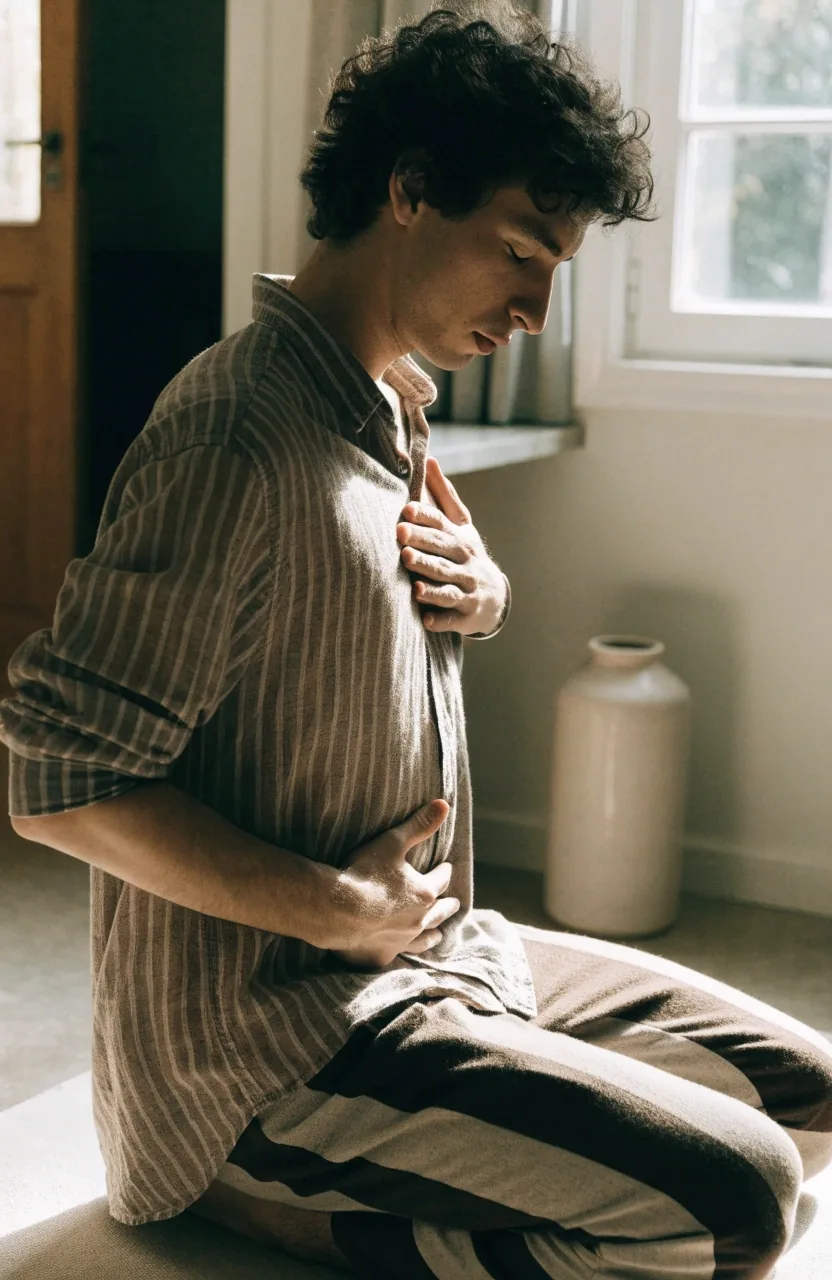
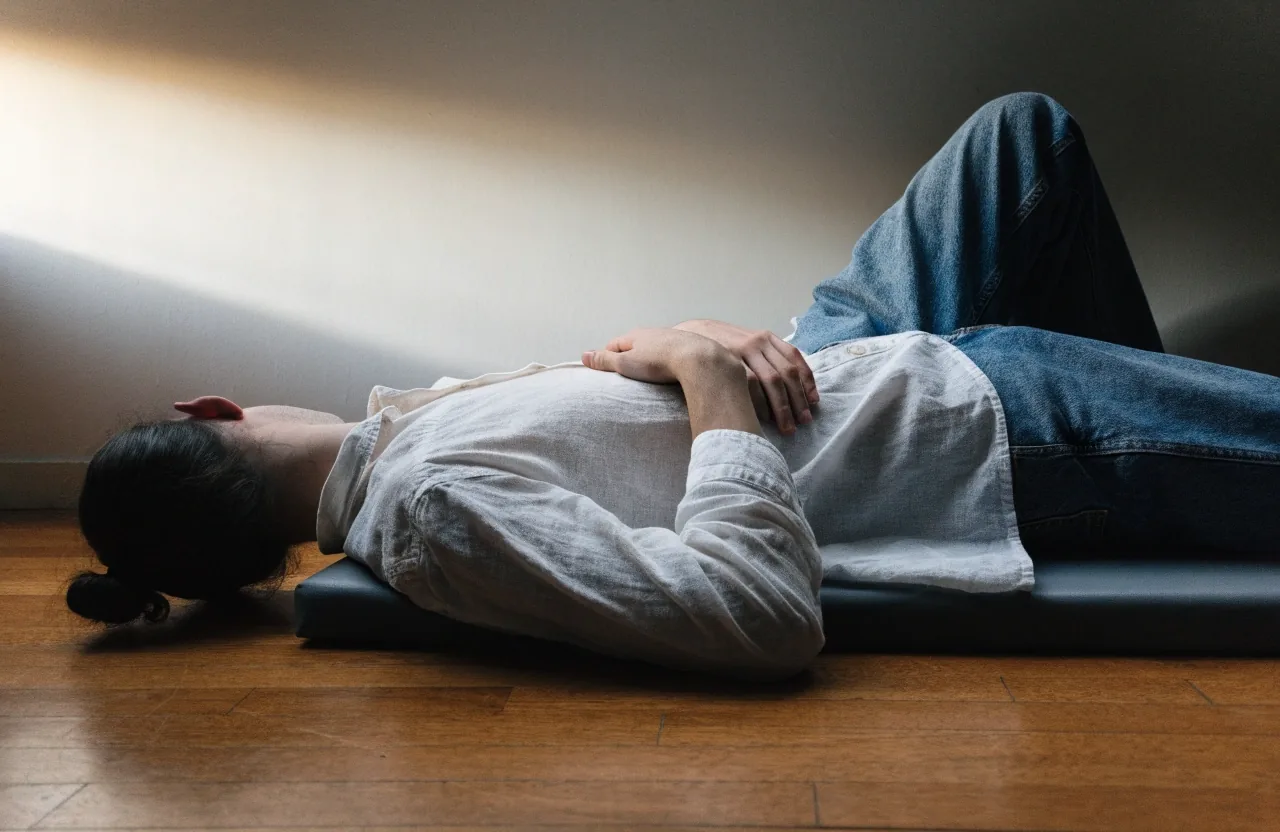
Sit or lie down. Put one hand on your lower ribs at the side and the other on your chest. Breathe in through your nose and aim the movement into the lower hand first — the chest hand should barely rise. Breathe out slowly through pursed lips, longer than the in-breath.
Five slow breaths is a reasonable first set. If your neck or shoulders start doing the work, stop and reset rather than pushing through.
- Ribs widen sideways, not shoulders up
- Out-breath runs longer than in-breath
- Pelvis and jaw stay loose throughout
Where you notice it
The lower hand rises and the ribs spread. If only the chest hand moves, you are still breathing high.
How long to hold
No long holds here. In for a slow count, out for a longer one, and repeat while it stays easy.
When to stop
Dizziness, strain or a held jaw all mean the breath got too big. Return to normal breathing and restart smaller.
Desk-friendly mobility
A three-minute break you can run without leaving your chair
Long sitting is the ordinary condition of an office day. These steps reset the stack instead of fighting it.
-
1
Sit tall on the front half
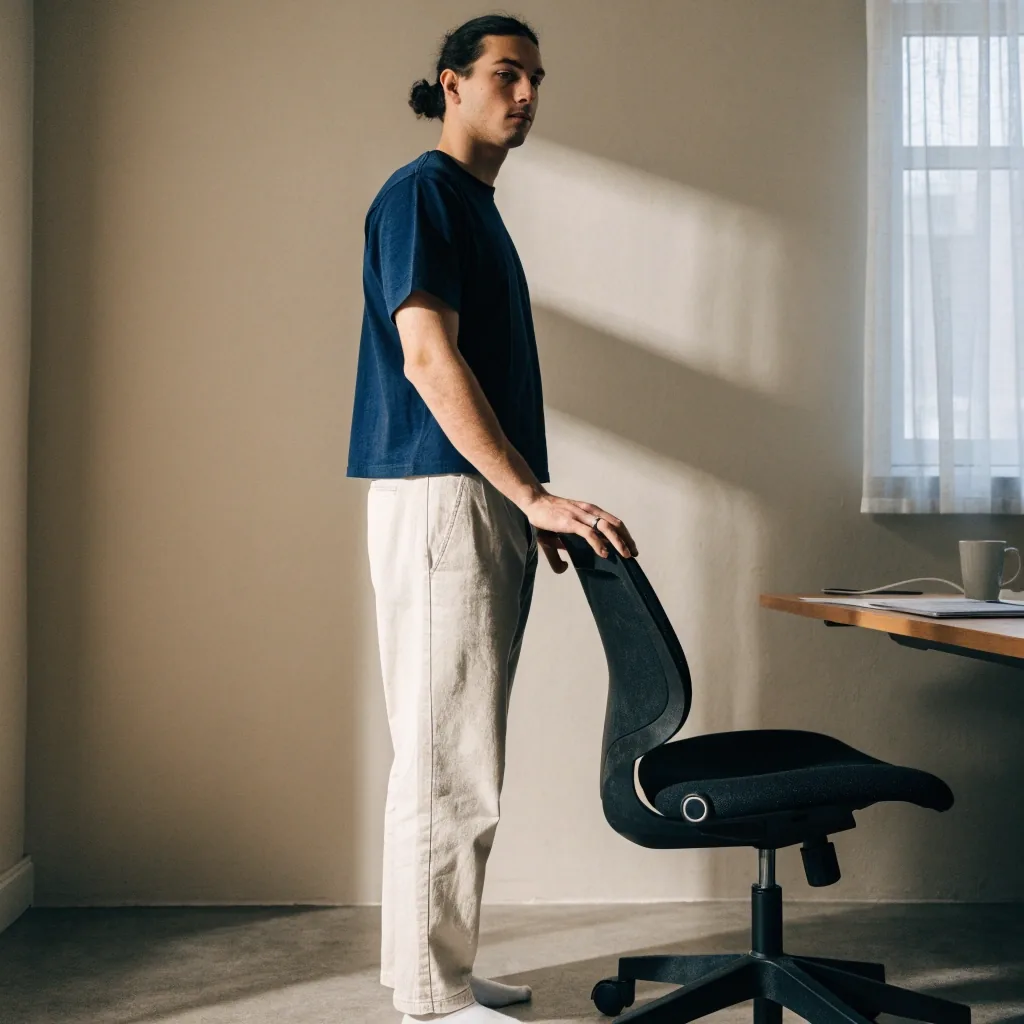
Slide forward until your sit bones carry you, both feet flat, knees level with or just below the hips. Let the chair back go.
-
2
Stack the ribcage
Lift the chest a centimetre and let it settle back over the pelvis. If you feel your lower back arch, you have gone past the point.
-
3
Take five wide breaths
Hands on the lower ribs, breathing into that width. On each out-breath let the pelvic floor soften rather than squeeze.
-
4
Stand and walk once
A short walk after the breath set tells you whether the position held. Notice your feet and let the stride be ordinary.
Where low-impact movement fits into a normal day
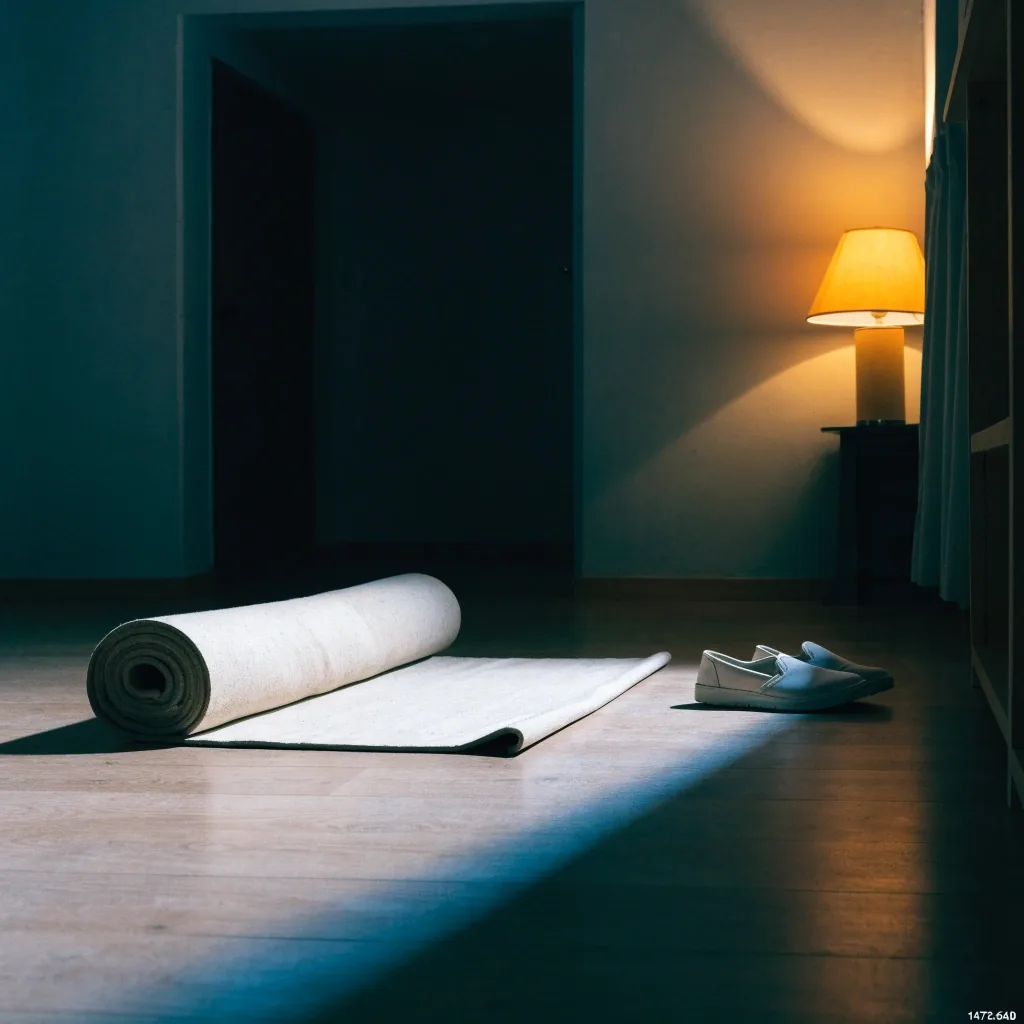
None of these need equipment or a class. Scroll sideways to see the settings people usually practise in.


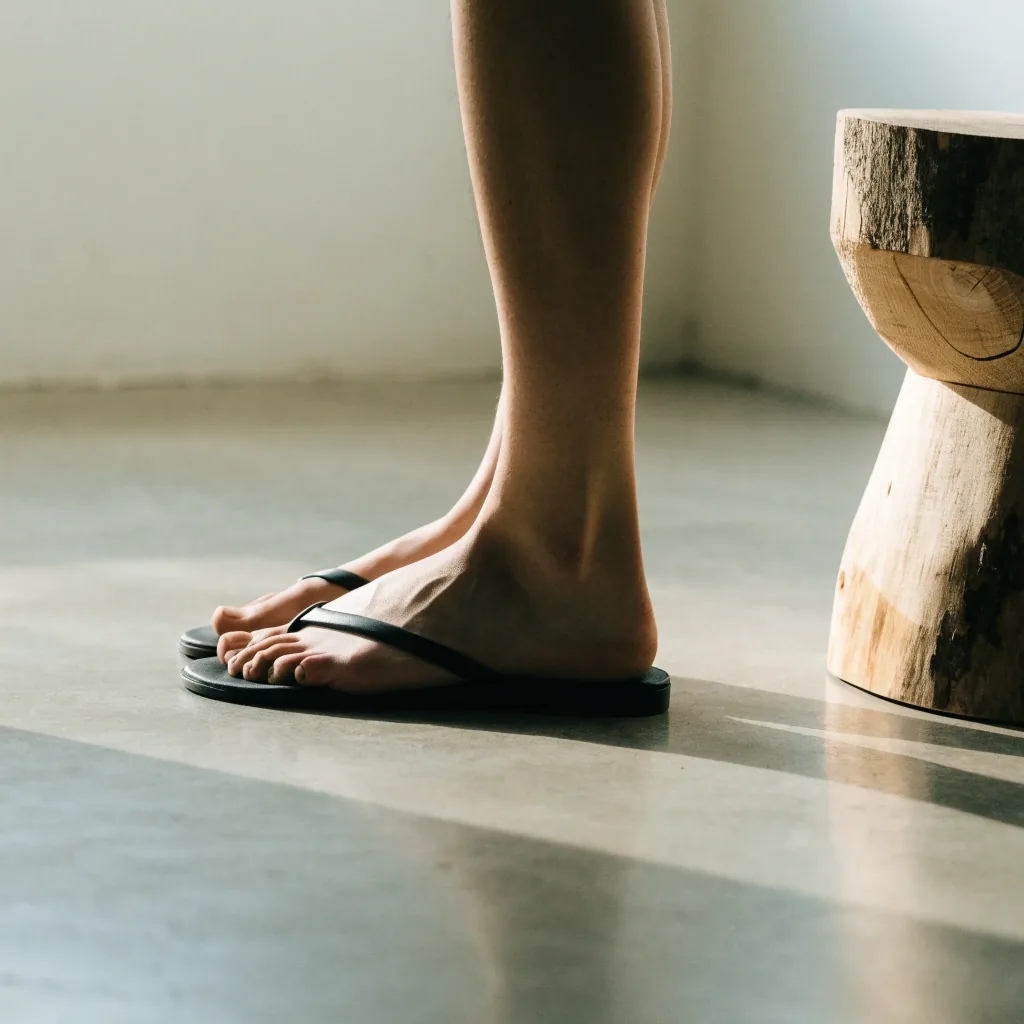
What good posture and core work looks like in practice
A short comparison of the signals that tell you the work is landing, and the ones that tell you to ease off. Neither column is a result — both are feedback while you practise.
Signals the work is landing
Signals to ease off and reset
You can breathe into the lower ribs without lifting the shoulders.
The chest rises first and the ribs stay narrow through the whole breath.
Sitting on the front half of the chair feels steady rather than tiring.
Your lower back aches within a minute of sitting tall, so you slump again.
A pelvic floor squeeze is easy to find and easy to let go of afterwards.
You can hold the squeeze but releasing it takes a second or two of effort.
Five slow breaths feel like less effort than the first time you tried them.
You finish a set tense in the jaw, neck or glutes instead of relaxed.
If something hurts rather than feels awkward, stop and speak with a qualified health professional before continuing. This page is general education, not individual advice.
Questions about posture and breath
Common things readers ask before they start. The answers stay general and educational. More sit in the Common Questions chapter.
How long before I notice anything from posture work?
There is no schedule we can promise you. What most people notice first is not a change in the body but a change in attention: you catch yourself slumped sooner, and standing up straight takes less thought. That shift is usually the earliest sign the practice is sticking. How fast it comes depends on how often you run the short sets and how much of your day is spent seated.
Do I need to fix my posture before I start Kegel exercises?
No. You can start the two side by side. Practising the breath first makes the squeeze easier to feel, because a relaxed out-breath gives you a clear reference for what letting go feels like. If your sitting posture is poor for most of the day, adding a short posture break before your sets is usually more useful than trying to correct your whole working day at once.
Can I do diaphragmatic breathing at my desk without anyone noticing?
Yes. Keep the out-breath soft and slow rather than deep, and let the ribs widen without pushing the belly out. Two or three rounds between tasks is enough to break a long stretch of shallow breathing. If you feel light-headed, the breath is too large for the moment — return to normal and pick it up again later.
Is Pilates or yoga useful for men starting out?
Both can be. The value is in the slow, controlled positions and the attention to breathing, not in the class name. If you join a class, tell the teacher you are working on posture and core stability and ask for the options that keep the lower back long. Skip any position that pushes you past what feels steady, and treat the class as practice rather than as a fix.
How do I know if I am bracing my pelvic floor instead of breathing?
The tell is the out-breath. If the pelvic floor tightens as you breathe out, you are bracing. If it softens and lets the breath finish, you are letting the floor move with the diaphragm. Practise the release for longer than the squeeze in every set — many men find the release is the part that needs the most repetition.
Where to go next
Keep reading the chapters in the order they build
Questions about your own routine
If you would like a slower walk through the posture and breathing work, our team in Jakarta can answer general questions about the guides and point you to the right chapter. We answer educational questions only — we do not give individual advice and we do not promise results.
- [email protected]
- Phone
- +62 21 584 7721
- Office hours
- Monday to Friday, 9:00 AM – 6:00 PM (WIB)
- Address
- Jl. Kemang Raya No. 18, Jakarta Selatan, DKI Jakarta 12730, Indonesia

PelvicCore Men's Wellness publishes general educational material about pelvic floor exercises, posture, breathing and everyday self-care habits for men. It is not individual advice and it does not promise outcomes. If something hurts rather than feels awkward, speak with a qualified health professional before continuing.