

Kegel basics for men
Kegel basics for men
Kegel exercises train the pelvic floor muscles — the layer that supports the bladder and bowel and helps control urine flow. This page explains what the exercises are, how to find the right muscles with standard cues, and how to structure a simple beginner routine with controlled holds and rest.
Educational guidance only. This site makes no promises about results.
The three cues, a four-week build-up, and the habits that keep a routine steady.
Plain words, no jargon, and no promises of outcomes. Read at your own pace and take only what fits your body.
The furniture of a routine
Where this practice actually happens
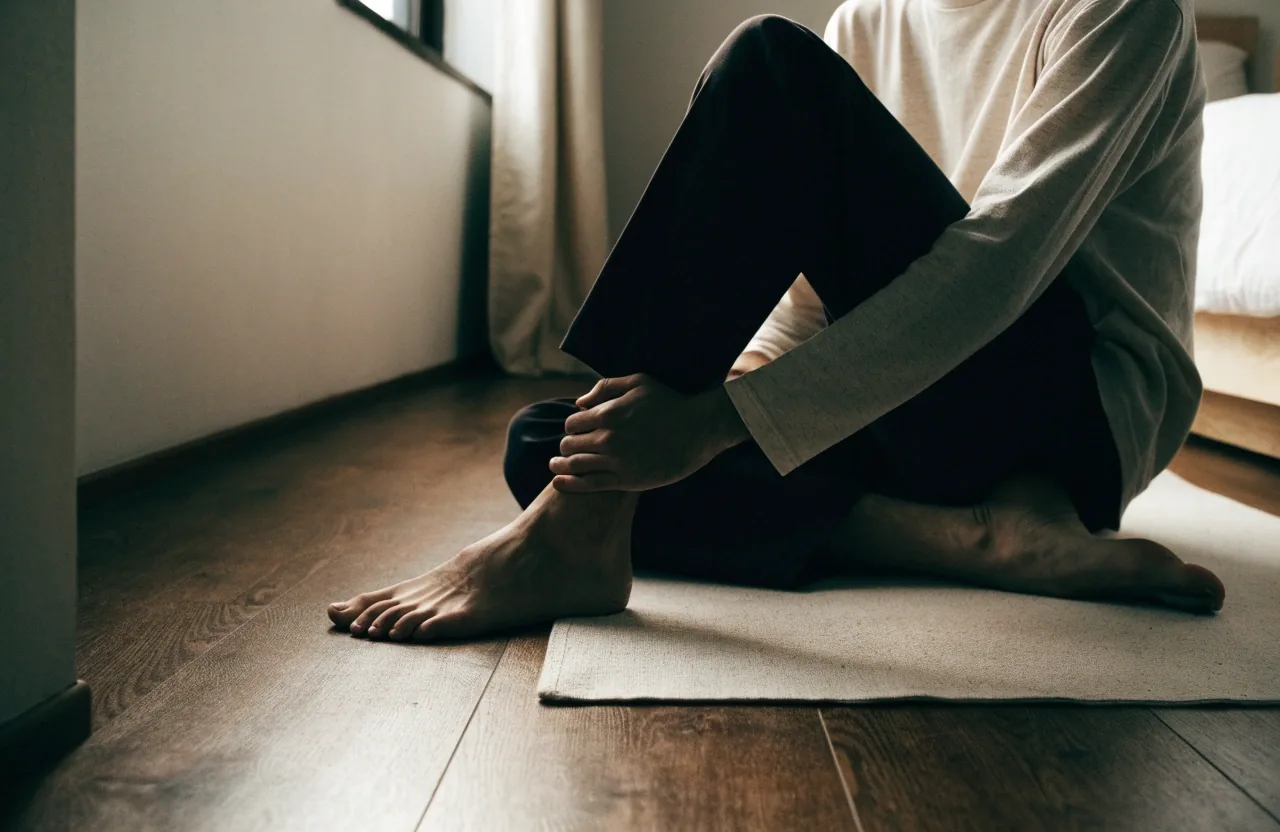
A desk, a chair, a mat on the floor, a moment before a shower. None of it looks like exercise, and that is why it survives a busy week in Jakarta.



What the pelvic floor muscles actually do
The pelvic floor is a hammock of muscle that sits at the base of the pelvis, stretched between the pubic bone at the front and the tailbone at the back. It holds the bladder and the bowel in place, and it wraps around the urethra and the back passage. When those muscles tighten, the openings close; when they let go, they open. Most of that work happens without you deciding anything.
Two names come up in almost every explanation you will find. The pubococcygeus muscle — often shortened to PC muscle — is the main strand of that hammock and the one most men can learn to feel first. Kontraksi is simply the tightening phase of a repetition; relaksasi is the release that follows. A repetition that has a hold but no clean release is only half a repetition, and it is usually the half people skip.
What Kegel exercises do is make an automatic process something you can choose. That is all the page claims. Training the muscles this way is a body-awareness practice, not a cure for anything, and the pace that suits one person may feel wrong for the next. If something hurts, stop and ask a qualified professional about it.
- Pelvic floor
- The muscle layer at the base of the pelvis, front to back.
- PC muscle
- The pubococcygeus, the main strand you learn to feel first.
- Kontraksi
- The tightening part of a repetition, held for a set count.
- Relaksasi
- The release that follows, held for at least as long as the tighten.
Finding the muscles
Three standard cues to locate the pelvic floor
Use these one at a time, not all at once. The goal is to notice a small lift and a small release, not to squeeze hard. If you cannot feel anything yet, that is common in the first week.
See also: posture and breathing, which change how easy this lift is to find.
-
Cue one
The stopping-the-flow cue, used carefully
Next time you urinate, try to slow the stream for a second and then let it finish normally. The muscle you just used is the pelvic floor. This is a one-time identification trick only — do not make it part of your routine, and do not practise it repeatedly, because the bladder and the pelvic floor are meant to work together without interference. Once you know the feeling, use one of the other two cues from then on.
-
Cue two
The gas-holding cue
Imagine you are in a meeting and need to hold back wind. The small inward lift you feel around the back passage is the same muscle group. Notice that your stomach, thighs and buttocks stay soft. If they tighten too, you are bracing rather than lifting, and the exercise will be harder to repeat cleanly.
-
Cue three
The mirror or fingertip check
Lying on your back with knees bent, place a hand flat just above the pubic bone and breathe out. Many men feel a slight drawing-in under the hand as the pelvic floor lifts. Others feel nothing at first. A mirror can also help you confirm that the base of the penis lifts slightly rather than the whole body tensing. Neither check is required — they are simply ways to confirm you are in the right area.
Your first four weeks
A beginner routine built on holds and rest
The routine below is deliberately small. Short and regular beats long and occasional, and a clean release matters more than a long hold. Stay at one week until it feels unremarkable before moving on.
If you are unsure whether this suits you, speak with a qualified professional first.
Sit or lie down. Tighten gently for two seconds, then release for four. Repeat five times, once or twice a day. The long release is the point: it teaches the muscle to let go fully.
Move to a four-second tighten and a four-second release, eight repetitions, twice a day. Breathe normally throughout. Holding your breath is the most common mistake at this stage.
After your slow set, add ten quick tighten-and-release repetitions with no hold at all. Keep them light. Quick lifts train a different fibre type than the slow holds, and the contrast helps you feel the difference.
Keep the same sets but attach them to something you already do: waiting for coffee, sitting at a red light, before a shower. Ten slow and ten quick repetitions, twice a day, is a reasonable long-term shape for a beginner routine.

One hand on the ribs is enough to tell whether you are breathing into the belly or holding your breath.
Breathing, posture, and the clenching trap
The pelvic floor does not work on its own. It responds to the diaphragm above it, and the two move together. As you breathe in, the diaphragm drops and the pelvic floor eases downward. As you breathe out, both return. If you hold your breath while tightening, you fight that rhythm and the exercise turns into a whole-body clench.
Try this: breathe in through the nose for a slow count of three, and as you breathe out for a count of four, tighten the pelvic floor gently. Release on the next breath in. Once that feels natural, you can tighten on the exhale without thinking about it — which is exactly how the exercise is meant to feel.
Posture changes how easy the lift is to find. Slumped in a chair with the lower back rounded, the pelvic floor sits in a shortened position and the lift feels vague. Sitting tall, or lying on your back with knees bent, gives the muscle room to move. None of this requires a gym or equipment; a plain chair is enough.
The common trap is clenching. If your stomach is hard, your buttocks are gripping, or your thighs are pushing together, you are bracing rather than training the pelvic floor. Bracing feels like effort and often convinces people they are doing well, when in fact the target muscle is doing very little. If you cannot tell the difference yet, reduce the effort by half and try again. Lighter is usually correct.
Common questions
What beginners ask most
Short answers to the questions that come up in the first weeks of practice. This page stays educational and makes no promises about what any individual will notice.
How often should I do Kegel exercises as a beginner?
Twice a day is a workable starting shape for most beginners: one slow set and one quick set, kept short. Daily practice matters more than a long session, and skipping a day is not a problem. If you find yourself clenching out of habit during the day, that is a sign to ease off rather than add more repetitions.
How long until I notice a change?
There is no schedule that applies to everyone, and this page will not give you one. What people often report first is not a physical change but a clearer sense of where the muscles are and when they are working. Judging progress week by week tends to be discouraging; judging it month by month is more realistic.
Can I do these exercises while sitting at my desk?
Yes. A plain chair works well, and a desk is often where the routine survives. Sit tall with both feet flat, let the shoulders drop, and run a short set between tasks. If you notice your stomach hardening or your thighs gripping, reduce the effort and start again on the next breath out.
Should I stop if something feels wrong?
Yes. Stop and speak with a qualified professional if you feel pain, if the effort leaves you more tense than you started, or if you are unsure whether this practice suits you. Nothing on this page is meant to replace individual advice, and pushing through discomfort is not part of the routine described here.
See also: the posture, breathing and core page for the mechanics behind the lift, and the daily routine builder for attaching practice to an ordinary day.
Where to go next
Once the three cues feel familiar, the next step is fitting the practice into a real week. These pages continue the same plain-language approach, and none of them promises an outcome.
Questions before you start? Write to [email protected] or call +62 21 584 7721, Monday to Friday, 9:00 AM – 6:00 PM (WIB).
This page is educational information about pelvic floor exercises. It is not a substitute for individual advice from a qualified professional, and it makes no promises about what any person will experience.
PelvicCore Men's Wellness · Jakarta